How SACCO Loans Work: A Complete Guide
A SACCO loan starts with eligibility, not an application form. Most SACCOs require a member to have been active for a minimum period and to hold savings or shares up to a set multiple of the amount they want to borrow — commonly expressed as a loan-to-savings ratio (for example, up to three or four times your savings balance). This protects the SACCO's pool of members' money: a loan is ultimately funded by everyone else's savings, so lending discipline protects the whole membership, not just the SACCO's own capital.
Once eligible, most SACCO loans still require a guarantor — one or more fellow members who pledge their own savings or shares as security, effectively co-signing the loan. If the borrower defaults, the guarantor's savings can be used to cover the shortfall, which is why SACCOs generally cap how many active guarantees one member can carry at once.
Interest is calculated one of two ways: flat rate (interest charged on the original principal for the full term, regardless of how much has already been repaid) or reducing balance (interest charged only on the outstanding balance, so it shrinks every time you make a repayment). The two produce very different real costs for what looks like the same headline rate — reducing balance is materially cheaper for the borrower over the life of the loan, which is why it's worth asking which method a SACCO actually uses before comparing rates across institutions.
After approval, the loan is disbursed — often directly to the member's SACCO savings account or by mobile money — and a repayment schedule is generated showing every installment's due date, principal, and interest portion. From there it's a matter of collection: reminders before each due date, and if a payment is missed, an escalating response that typically starts with an SMS reminder and moves through follow-up contact, a formal demand letter, and guarantor notification before any recovery action.
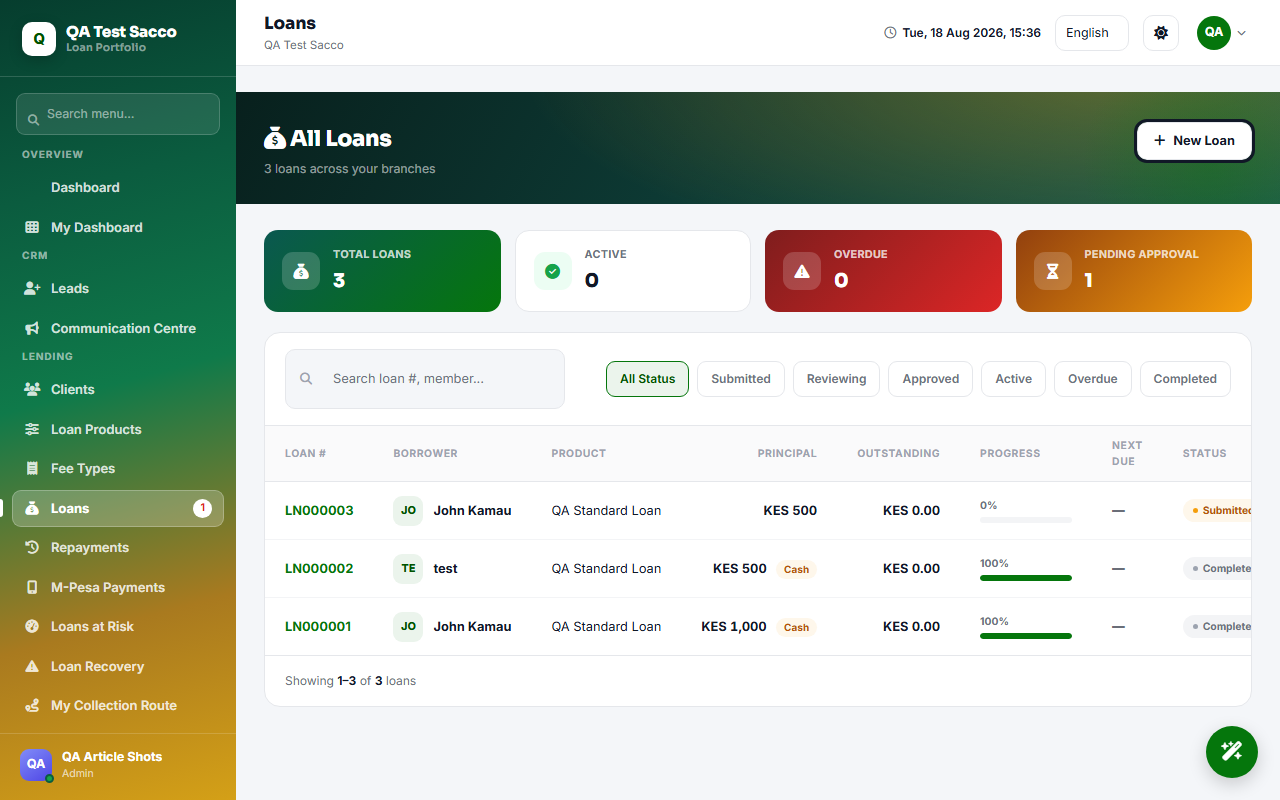
Every one of those stages — eligibility checks, guarantor limits, interest-method selection, disbursement, and automated collection reminders — is something pawa Loans runs for you automatically rather than tracking by hand across a dozen spreadsheets.
Frequently asked questions
Do I need a guarantor for every SACCO loan?
Most SACCO loans require at least one guarantor, a fellow member who pledges their own savings or shares as security, though some SACCOs also accept physical collateral instead or alongside a guarantor.
How is my loan eligibility decided?
Mainly by your savings/shares relative to the amount you want to borrow, commonly expressed as a loan-to-savings ratio (for example, up to three or four times your savings balance).
What happens if I miss a payment?
Most SACCOs escalate in stages, a reminder before the due date, then an SMS or call if it's missed, followed by a formal demand letter and guarantor notification if it stays unpaid.
Ready to run your SACCO, chama, or microfinance from one dashboard?
Get started