How Group Loans Work for Chamas and SACCOs
A group loan is exactly what it sounds like, a single loan issued to a registered group (a chama, a table-banking group, or a SACCO-affiliated group) rather than to one individual, with the whole group jointly responsible for repaying it. It's one of the oldest tools in group finance because it solves a real problem: many worthwhile borrowers, especially first-time ones, don't have enough individual credit history or collateral to qualify for a loan on their own, but a group with a track record of saving together does.
The mechanism that makes it work is joint liability, every member of the group shares responsibility for the full loan, not just their own portion of it. If one member falls behind, the group as a whole is still on the hook for the repayment schedule. That sounds harsh in isolation, but it's precisely what makes group loans lower-risk for the lender than the sum of the same individuals borrowing separately, peer accountability inside a group that already meets regularly is a genuinely strong repayment incentive, often stronger than a lender's own collections process.
In practice, the loan is usually still tracked per member internally, even though it's legally one loan: each member's agreed share of the principal, their own repayment contributions, and their individual standing within the group. A group treasurer (or the group's leadership) is typically responsible for collecting each member's portion and remitting the full installment, and a well-run group keeps its own internal record of who's current and who isn't, separate from whatever the lender sees as one consolidated loan.
Group lending isn't automatically safer than individual lending, it depends entirely on whether the group actually has the internal cohesion and track record the model assumes. A newly formed group with no savings history together carries real risk a lender should price in; a group that's been contributing together for years is a genuinely different proposition.
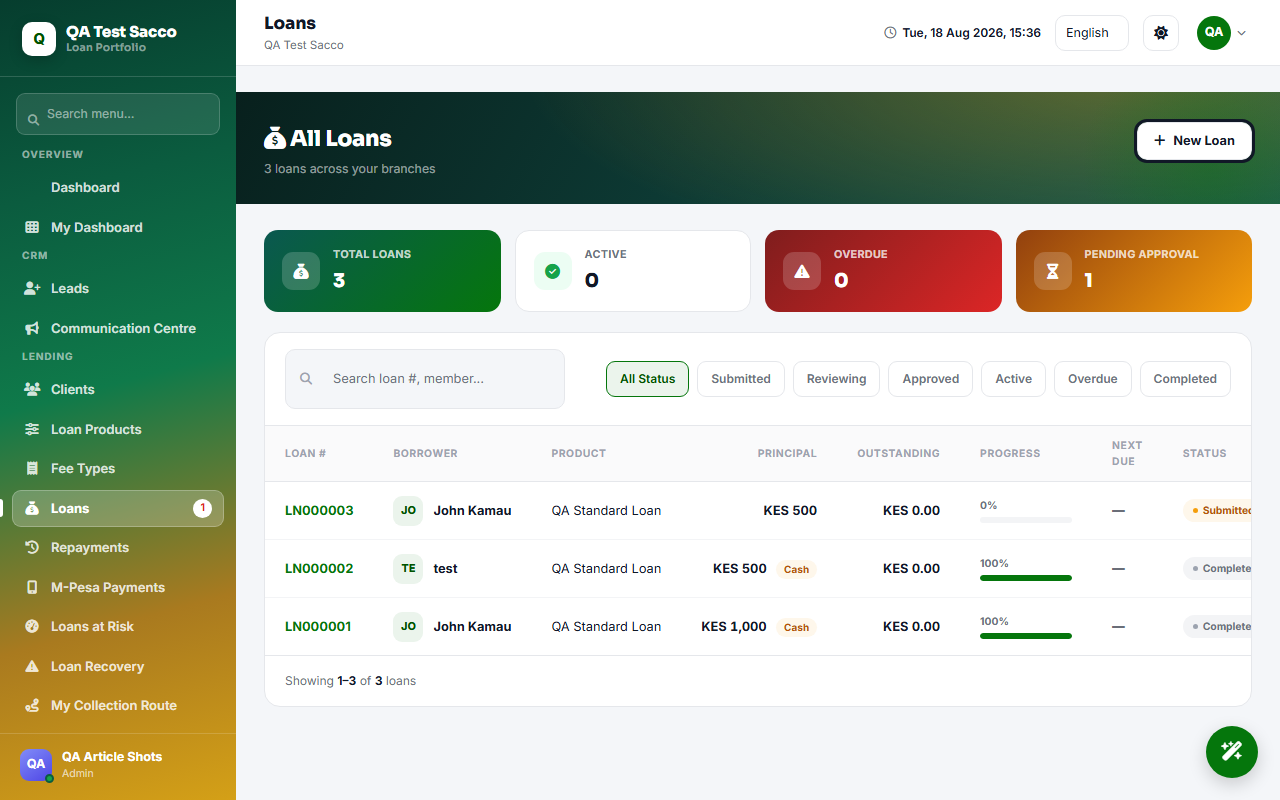
pawa Loans supports real group loan products, complete with joint-liability accounting at the group level and per-member contribution tracking underneath it, so a SACCO can see both the group's consolidated loan and exactly where each member stands within it, without running two separate systems to get both views.
Frequently asked questions
Who is responsible for repaying a group loan?
The whole group, jointly, every member shares responsibility for the full loan under joint liability, not just their own portion.
Why are group loans often lower-risk for the lender?
Peer accountability inside a group that already meets regularly is a genuinely strong repayment incentive, often stronger than the lender's own collections process.
Is a group loan tracked per member or just as one loan?
Both, it's legally one loan, but well-run groups (and good systems) still track each member's agreed share and individual standing internally.
Ready to run your SACCO, chama, or microfinance from one dashboard?
Get started