Best SACCO Management Software in Kenya: What Should You Look For?
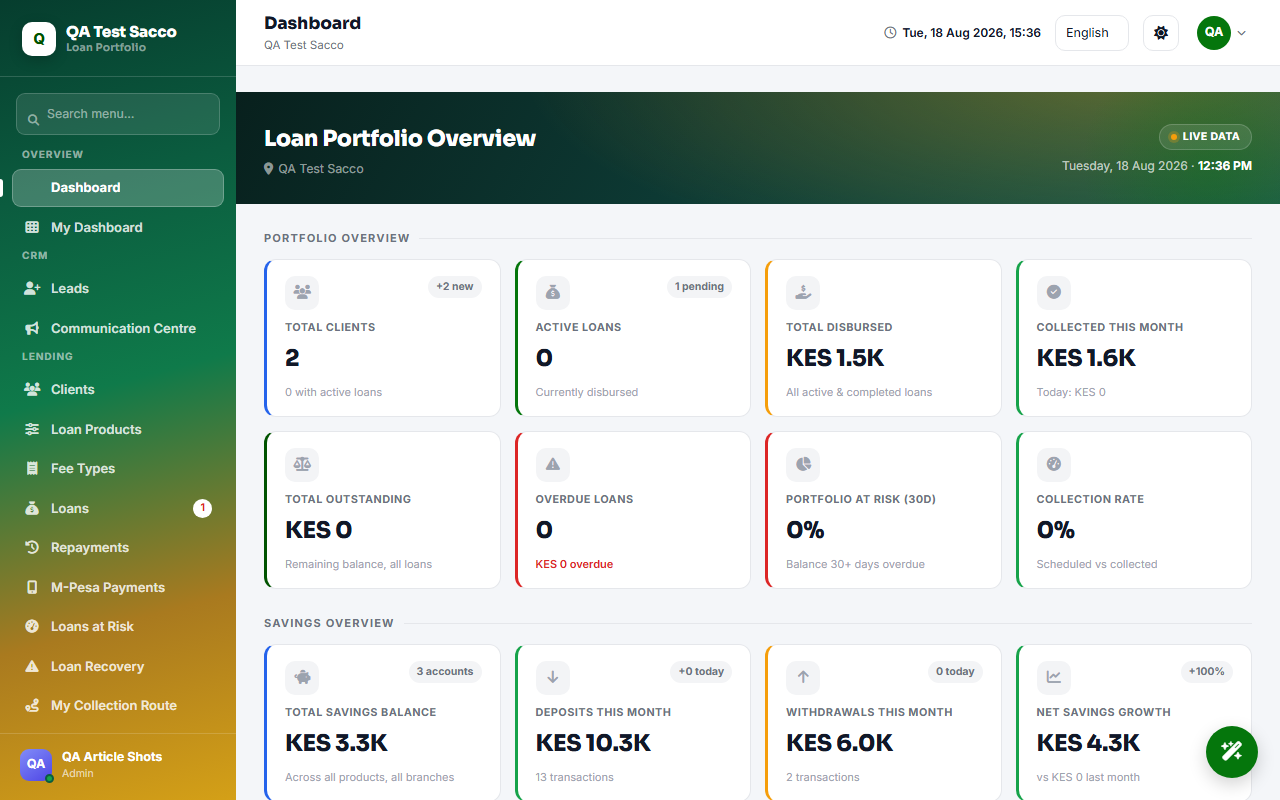
A growing SACCO has to manage members, savings, shares, loans, repayments, guarantors, expenses, income, reports, staff access, and financial records, all at once. When these run on spreadsheets, notebooks, or disconnected tools, errors become harder to catch and operations get harder to scale, which is why most Kenyan SACCOs eventually move to dedicated management software. The question is what actually separates a good system from one you'll outgrow within a year.
Member management should be the foundation, not an afterthought: complete member profiles, quick lookup of any member's financial position, and a real audit trail behind every record. On top of that, savings and contributions need to be traceable, member, date, amount, account, and reference, so nobody has to reconstruct a member's balance by hand. Loans are usually where the real complexity sits: a proper loan module needs configurable loan products, appraisal, approval workflows, interest calculation (flat or reducing balance, and the two produce very different real costs), repayment schedules, guarantors, collateral, arrears tracking, and statements.
M-Pesa matters more in Kenya than almost anywhere else, so ask specifically whether the system can match incoming payments to the right member automatically, whether payment references are stored, and how failed or unmatched transactions are surfaced for review, not just whether "M-Pesa integration" appears on a features list. The same scrutiny applies to accounting: a repayment or deposit should generate the correct ledger entries on its own rather than requiring staff to re-enter the same transaction in a separate bookkeeping tool.
Beyond the transactional layer, three things separate professional software from a glorified spreadsheet: role-based permissions (a teller shouldn't have an accountant's access, and neither should have an administrator's), an audit trail that records who created, edited, or approved every entry and when, and reports that let management see the SACCO's real financial position without manually combining files. A member portal, where members can check balances, loans, and statements themselves, reduces the volume of routine questions staff have to field every day, and cloud access matters for any SACCO with multiple branches or field officers, provided it's evaluated on real security and backup practices rather than chosen just because it's "online."
Before committing to any system, ask the vendor for a live demonstration of your actual workflow: create a member, record a contribution, apply for and approve a loan, record a repayment, generate a statement, and pull a report. If it handles that comfortably, it's a genuine candidate. pawa Loans is built around exactly that workflow, members, savings, contributions, loans, guarantors, welfare, accounting, and reporting on one connected platform, so a SACCO isn't left stitching spreadsheets together to answer questions the software should already know the answer to.
Frequently asked questions
What is the best SACCO management software in Kenya?
The best system depends on the SACCO's size, workflows, budget, and required integrations. Look for comprehensive member, savings, loan, accounting, reporting, security, and access-control functionality rather than the longest feature list.
How much does SACCO software cost in Kenya?
Pricing varies significantly by provider depending on member limits, features, number of users, integrations, and support included, there is no single standard price.
Can SACCO software integrate with M-Pesa?
Many modern Kenyan SACCO platforms offer M-Pesa-related functionality. Always confirm exactly what integration is included and how reconciliation actually works before assuming it's covered.
Ready to run your SACCO, chama, or microfinance from one dashboard?
Get started