SACCO vs Chama: What's the Difference?
"Chama" and "SACCO" get used interchangeably in everyday conversation, but they're genuinely different structures, and the difference matters once money starts moving.
A chama is an informal (or semi-formal) self-help group — usually friends, relatives, or colleagues who agree to save and lend among themselves. Many chamas run as a merry-go-round (also called table banking): each member contributes a fixed amount at every meeting, and the full pooled amount goes to one member per round, rotating until everyone has received their turn. Others run more like a mini-SACCO — members save into a common pot and borrow from it at an agreed interest rate. A chama can register as a simple group (a "self-help group" or a company/society), but it doesn't answer to a financial regulator, and its rules are whatever the members agree on and write down.
A SACCO is a formally registered co-operative under the Co-operative Societies Act, with its own constitution, an elected board, audited accounts, and — if it takes withdrawable deposits — SASRA oversight. It's built for scale: hundreds or thousands of members, a common bond (often an employer or professional association), and a level of regulatory and reporting obligation a chama simply doesn't carry.
Neither is "better" in the abstract — they solve different problems. A chama is fast to start, flexible, and well suited to a tight-knit group that wants to save and borrow among themselves without heavy overhead. A SACCO is the right structure once you need scale, formal deposit-taking, external credibility (for members who want a real loan history), or you're bringing together people who don't already know each other personally.
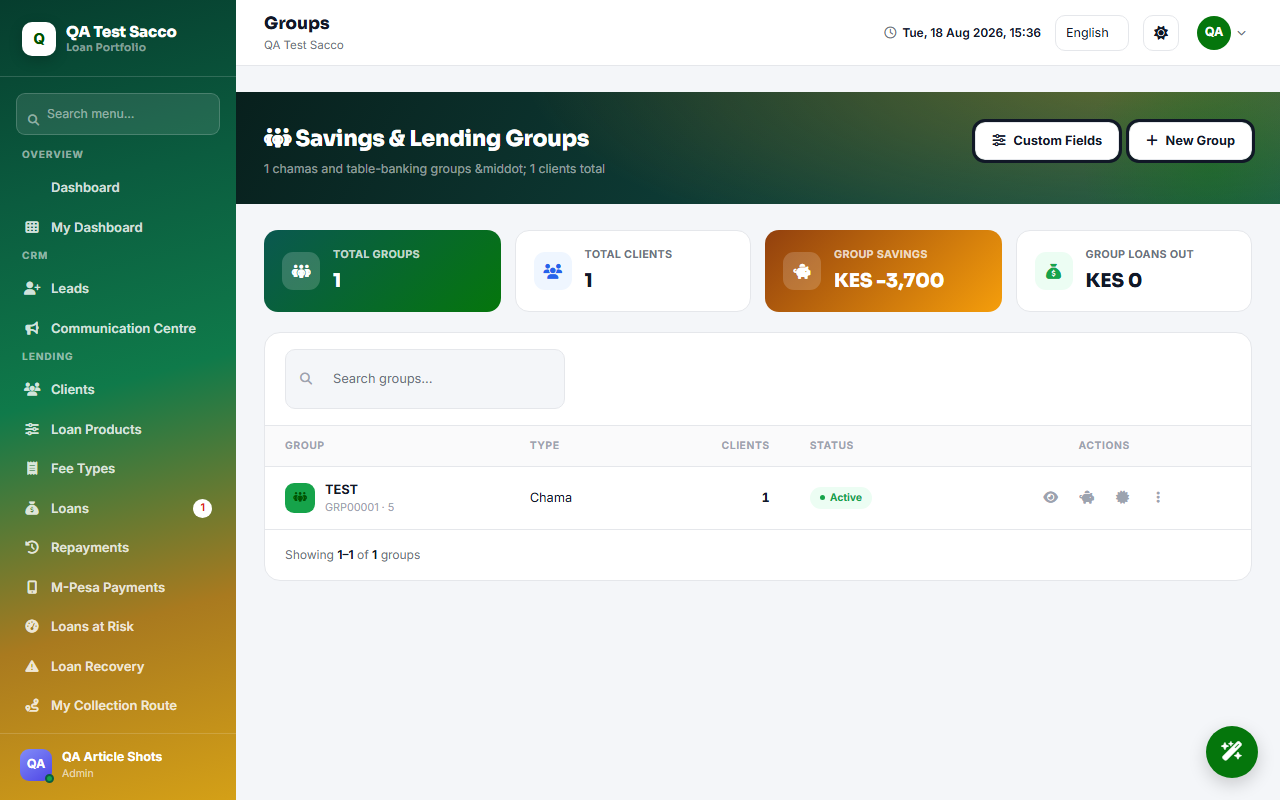
The two aren't even mutually exclusive: many real SACCOs in Kenya were themselves outgrown chamas that formalised once they got too big for a WhatsApp group and a notebook to manage safely. pawa Loans supports both ends of that journey in one system — chama features like merry-go-round rotation, group contributions, and welfare funds sit alongside full SACCO-grade savings, shares, and loan accounting, so a growing chama doesn't have to switch software the day it decides to register.
For the current SACCO Societies Act, regulations, and MIS/reporting guidance, see SASRA's official website directly rather than relying on any vendor's compliance claims, including ours.
Frequently asked questions
Can a chama become a SACCO later?
Yes, many real SACCOs in Kenya started as chamas that formalised once they outgrew a WhatsApp group and a notebook.
Does a chama need to register with SASRA?
No. SASRA oversight only applies to deposit-taking SACCOs; an informal chama or table-banking group answers to no financial regulator, only to its own agreed rules.
What's the main practical difference between the two?
Scale and regulation. A chama is fast to start and flexible for a tight-knit group; a SACCO carries formal governance, audited accounts, and (for deposit-taking ones) SASRA reporting obligations.
Ready to run your SACCO, chama, or microfinance from one dashboard?
Get started