Managing Chama Contributions Without the Spreadsheet Headache
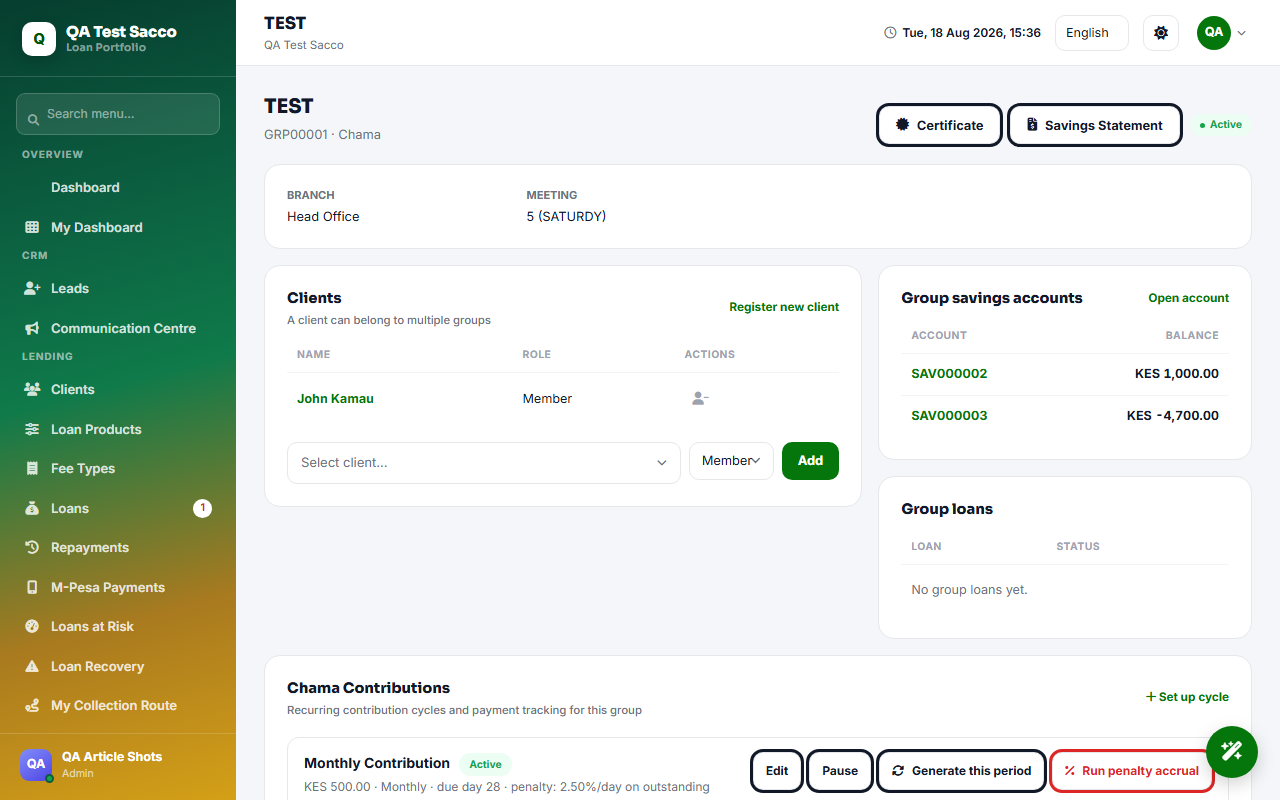
Every chama starts the same way: a WhatsApp group, an Excel sheet, and a treasurer who updates it after every meeting. It works fine for the first ten members. By member thirty, with a mix of monthly and weekly contribution cycles, partial payments, and the occasional dispute over "I paid, check your sheet again," it stops working — and in a group built entirely on trust, a contribution dispute is far more damaging than the shillings involved.
The core of the problem is that a spreadsheet has no memory of intent. It can show a number in a cell, but it can't tell you on its own which members are fully paid for this cycle, which are partially paid, which haven't paid at all, and what the group's actual collection rate is this month versus last month — the treasurer has to reconstruct all of that by hand, every time someone asks.
A properly run contribution system needs three things a spreadsheet genuinely struggles to give you: an expected amount and due date generated automatically for every member every cycle (not typed in manually and prone to copy-paste drift), a real running status per member — paid, partial, or pending — updated the moment a payment lands, and a group-level view of completion rate so leadership can see at a glance whether this month is on track before it becomes a crisis at the next meeting.
The same discipline applies to penalties for late contributions, if the group charges them: they need to be calculated consistently off the actual due date, not estimated by whoever's turn it is to update the sheet that week.
pawa Loans's Chama tools generate every member's expected contribution automatically each cycle, track paid/partial/pending status in real time, and surface exactly who's behind and by how much — the treasurer stops being a human spreadsheet, and the group stops relitigating "did I pay or not" at every meeting.
Frequently asked questions
What's the biggest weakness of tracking contributions on a spreadsheet?
A spreadsheet has no memory of intent, it can show a number but can't tell you on its own who's fully paid, who's partial, and who hasn't paid at all for the current cycle.
What does a contribution system actually need to solve this?
An expected amount and due date generated automatically each cycle, a real-time paid/partial/pending status per member, and a group-level completion rate leadership can check at a glance.
Should late-payment penalties be calculated manually?
No, they need to be calculated consistently off the real due date, not estimated by whoever's turn it is to update the sheet that week.
Ready to run your SACCO, chama, or microfinance from one dashboard?
Get started