How to Start a SACCO in Kenya
A Savings and Credit Co-operative Organisation (SACCO) is a member-owned financial institution built around a "common bond" — a group of people who share something in common, most often an employer, a profession, or a location. Members pool their savings, buy shares in the co-operative, and borrow against that pool at rates set by the members themselves rather than a commercial bank.
Starting one is a real legal process, not just an agreement between friends. In Kenya, a SACCO is registered under the Co-operative Societies Act with the Commissioner for Co-operative Development. You will need a founding group of members (the exact minimum depends on the type of SACCO), a drafted constitution (the "by-laws") setting out how shares, savings, loans, and dividends work, and a registered office. If your SACCO intends to take deposits and offer withdrawable savings accounts (a "deposit-taking SACCO" or DT-SACCO), it also falls under SASRA — the Sacco Societies Regulatory Authority — which sets minimum capital and prudential requirements before you can operate that kind of account.
Before you accept a single deposit, decide on the fundamentals: what loan products will you offer, what interest method (flat or reducing balance — the difference matters more than most new SACCOs realise), how often will dividends be declared, and how will members' savings, shares, and loan balances actually be tracked. A surprising number of new SACCOs run their first year on spreadsheets, which works until the first dispute over a member's balance — at which point a proper system that keeps a real, auditable ledger of every deposit, withdrawal, share purchase, and loan repayment stops being optional.
Once registered, the real work is operational: onboarding members, collecting the first round of savings and share capital, setting loan eligibility rules, and holding your first Annual General Meeting to formally adopt your by-laws and elect a board. Most of the SACCOs that struggle in year one aren't undone by bad by-laws — they're undone by poor record-keeping that makes members lose trust in their own balances.
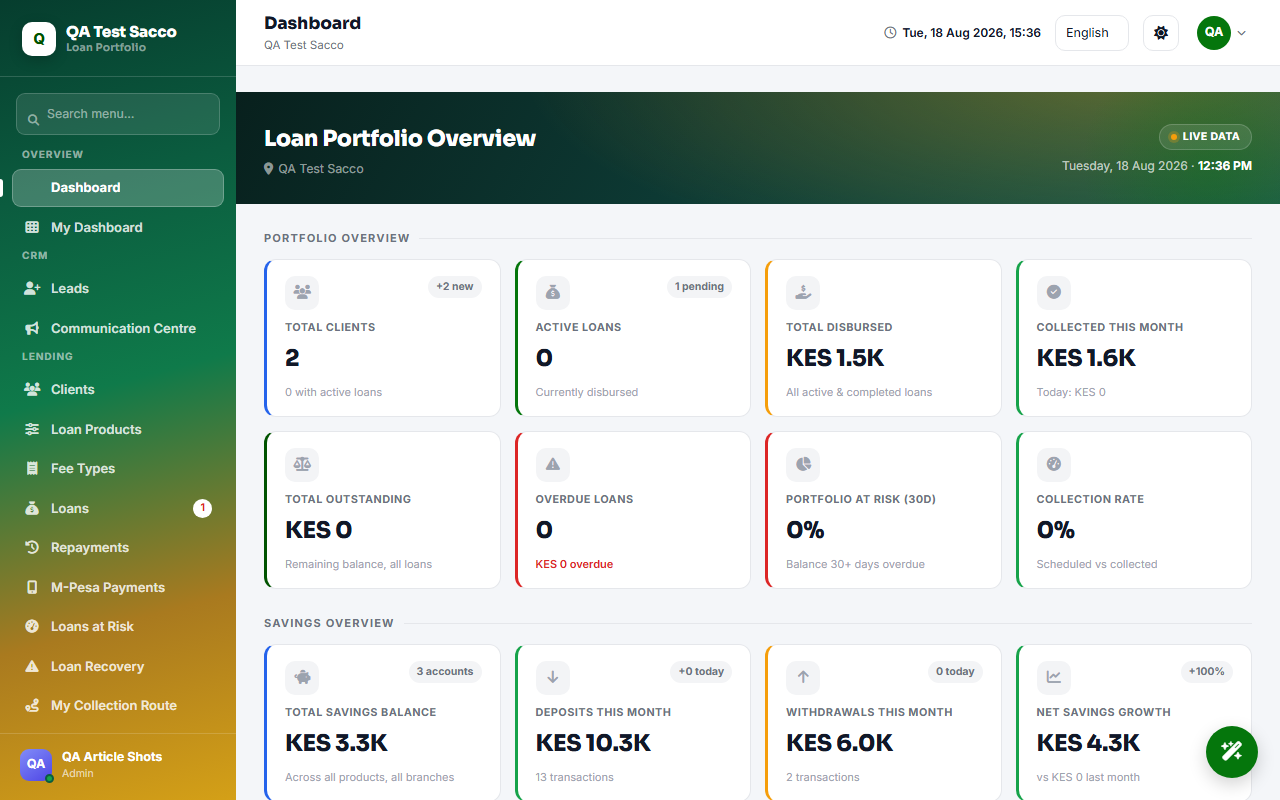
pawa Loans exists for exactly this stage: a real double-entry accounting engine under the hood, member savings and share accounts, loan products with your own interest rules, and dividend declarations at AGM time — the operational backbone a new SACCO needs from day one, not something to bolt on after the first dispute.
For the current SACCO Societies Act, regulations, and MIS/reporting guidance, see SASRA's official website directly rather than relying on any vendor's compliance claims, including ours.
Frequently asked questions
What's the minimum number of members needed to start a SACCO in Kenya?
The exact minimum depends on the type of SACCO you're registering, but every SACCO needs a founding group of members plus a drafted constitution before the Commissioner for Co-operative Development will register it.
Do I need SASRA approval to start a SACCO?
Only if you plan to accept withdrawable deposits. A SACCO that only manages shares and locked savings registers under the Co-operative Societies Act alone; one that takes deposits becomes a DT-SACCO and falls under SASRA's additional oversight.
Can a SACCO run on spreadsheets in its first year?
It's possible but risky, most disputes that damage member trust start with a balance nobody can verify. A real ledger that records every deposit, withdrawal, share purchase and repayment becomes necessary the moment the first dispute happens.
Ready to run your SACCO, chama, or microfinance from one dashboard?
Get started